%202_e.png)


The First AI Lens of the Future: Meta Ray-Ban Display

By Blake Hatwood
Biochem Associate; The Lawrenceville School, NJ
In September 2025, Meta unveiled its most advanced wearable technology: the Meta Ray-Ban Display, a pair of AI-powered glasses incorporating real-time artificial intelligence (AI) capabilities with augmented reality (AR) design. Unlike prior smart eyewear, these glasses are supported by Meta’s Neural Band, an electromyography (EMG) wristband that translates subtle muscle signals into precise digital commands. The result: a hands-free, screenless experience that pushes the boundaries of human-machine synergy.

The Meta Ray-Ban Display’s core components include the in-lens AR display, built-in Meta AI assistant, and Neural Band. Users can issue verbal commands or perform micro hand gestures to navigate apps, scroll through feeds, or, most notoriously, optimized for action-capturing photos and videos. Meta claims the EMG sensor can detect “a single millimeter of finger movement,” allowing for subtle, intuitive control. The glasses also feature real-time translation and visual recognition capabilities through Meta AI, enabling users to access information instantaneously within their peripheral vision. By combining AR visuals with natural hand input, Meta has designed a new way for humans to connect with digital data.
Meta’s motivation for this groundbreaking innovation stems from a shift away from traditional mobile interfaces that constantly protrude into our daily lives. The company’s CEO, Mark Zuckerberg, described the new direction as “building a world beyond the screen, where AI becomes part of everyday reality.” This vision contrasts with Meta’s prior focus on mobile platforms: Instagram, WhatsApp, Facebook, and Messenger. These platforms have defined Meta’s sovereignty in digital communication and mobile networking. The company’s shift from screen-based devices towards AR wearables represents Meta’s attempt to define the next generation of computing, one that liberates users from smartphones by integrating AI directly into everyday fashion.
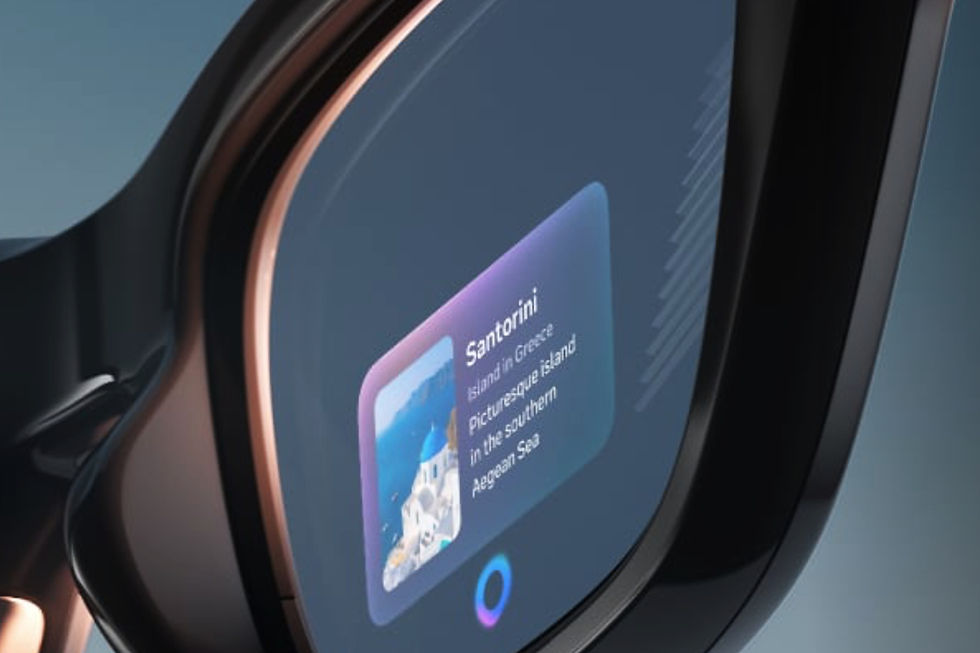
Its lightweight, stylish form factor and integrated AI system separate the Meta Ray-Ban Display from competitors such as Apple’s Vision Pro or Google Glass. While Apple’s device is relatively bulky and primarily targeted towards mixed-reality immersion, an experience that blends the physical world with digitally generated environments through a headset interface, Meta’s product blends seamlessly into the competitive market of everyday eyewear. Priced at $899, the Ray-Ban Display is significantly more economical than its high-end AR counterparts, making it more accessible to the general population. Analysts estimate that if Meta sells an estimated five million units in its first year on the market, the company could generate over $4.5 billion in revenue.

Still, the glasses confront limitations. Battery life currently extends to about four hours per charge, and prevalent privacy concerns linger due to the consistent presence of cameras along with AI monitoring embedded within the glasses. Beyond technical limitations, the ethical implications of this newfound technology pose an even greater obstacle. The glasses’ ability to discreetly document videos, capture images, or even store conversations has precipitated fears of misuse for surveillance or unauthorized data assemblage. Without visible indicators, individuals could be inadvertently recorded in private settings, echoing public repercussions once faced by Google Glass users. Ethical scholars warn that such “invisible surveillance” may erode trust in public and social spaces. To mitigate these risks, Meta and other developers will need to establish draconian data protection standards, visible recording signals, and comprehensive privacy regulations. Without ardent governance. The line between technological innovation and ethical responsibility may be obscured, jeopardizing the sustainable development of future AI wearables.
Yet, their potential is undeniable. As AI becomes increasingly integrated into wearable devices, products like the Meta Ray-Ban Display could signify the inception of a future where wearable digital information becomes a digital layer of daily experience. These glasses not only reimagine convenience but redefine what it means to view the world through the lens of AI.
References
Kang, C. (2025, September 28). Meta’s AI glasses bring augmented reality to your face. The New York Times. https://www.nytimes.com/2025/09/17/technology/personaltech/meta-smart-glasses-ai.html
Meta. (2025). Introducing Meta Ray-Ban Display and Neural Band. Meta Newsroom. https://about.fb.com/news/2025/09/meta-ray-ban-display-ai-glasses-emg-wristband/
Peters, J. (2025, September 30). Meta’s new Ray-Ban smart glasses are more than a camera—they’re an AI assistant. The Verge. https://www.theverge.com/news/780012/meta-ray-ban-gen-2-smart-glasses-connect-2025
Smith, A. (2025, October 1). Privacy and promise: The risks behind Meta’s new AI eyewear. Wired. https://www.wired.com/story/metas-new-smart-glasses-got-a-subtle-name-change-it-speaks-volumes-about-whats-wrong-with-them/
TechRadar. (2025, October 3). Meta Ray-Ban Display: Price, specs, and market forecast. TechRadar. https://www.techradar.com/computing/virtual-reality-augmented-reality/meta-connect-2025-7-things-we-learned-from-a-packed-keynote-with-plenty-of-smart-glasses
Zuckerberg, M. (2025, September 27). Meta Connect 2025 Keynote. Meta Platforms. https://developers.facebook.com/videos/2025/connect-keynote-2025/


Comments