%202_e.png)


The Race Between Recombinant DNA and CRISPR-Cas9: A New Era in Genetic Engineering

Updated: Jul 8, 2025
By Anvi Anand,
Technology Columnist; The Lawrenceville School, NJ
Marvel’s Ghost Rider or D.C.’s Flash? The constant race between Recombinant DNA and CRISPR-Cas9 is moving faster than the speed of light, or should we say—the speed of genetic engineering? Scientists are transitioning to CRISPR-Cas9, a revolutionary biotechnology that is reshaping the medical landscape.
Understanding Recombinant DNA
Since the 1970s, traditional Recombinant DNA has been vital for gene manipulation. This method is known for its discovery of restriction enzymes. These enzymes cut DNA at specific restriction sites, typically palindromic sequences of base pairs.
DNA strands from different species are cut and fused together through ligase enzymes (bonding proteins), forming a hybrid chain. After fusion, the hybrid chain integrates into a bacterial host cell, enabling replication through gene cloning. This process provides a larger supply to meet high medical demands.

Recombinant DNA has significantly advanced the creation of disease diagnostic tests for genetic disorders. It has also played a crucial role in producing vaccines for Hepatitis B and COVID-19, along with applications like enhancing the freshness of tomatoes.
Despite its successes, this gene editing technique is labor-intensive, involving many steps and considerable costs. Retrieving specific enzymes is expensive. Extensive screening is required to prepare the DNA, and the use of restriction enzymes presents challenges in precision and predictability once the strand is combined with foreign DNA. Ghost Rider is fast, but not fast enough.
The Superiority of CRISPR-Cas9
Enter the Flash, or CRISPR-Cas9. Discovered in 2012, Clustered Regularly Interspaced Short Palindromic Repeats (CRISPR) and its associated protein Cas9 emerged as groundbreaking technology in the medical field. CRISPR-Cas9 offers inexpensive and efficient genetic editing methods, taking a similar approach to Recombinant DNA but with enhanced precision.
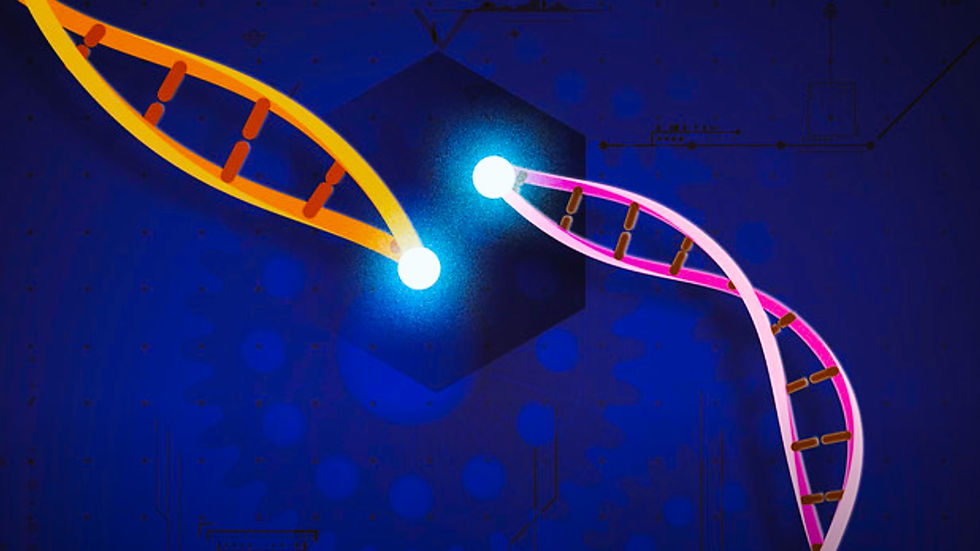
CRISPR-Cas9 utilizes a short piece of guide RNA that directs the Cas9 enzyme to cut specific locations in the DNA strand. The Cas9 protein selectively binds to the DNA that matches the guide RNA, allowing for specific edits rather than simply inserting foreign genetic material.
Once an unhealthy gene is cut by the Cas9 protein, the cell attempts to repair itself. This method is more straightforward and easier to execute in labs, ultimately lowering both labor and costs compared to traditional techniques.
In recent years, CRISPR-Cas9 has been utilized to modify immune cells, enabling them to target and destroy cancer cells. It has been a vital part of the treatment processes for leukemia and lymphoma. Moreover, CARMEN, a CRISPR-based diagnostic tool, was developed for rapid COVID-19 detection. This tool requires minimal equipment while generating a significant impact during the pandemic.
Ethical Concerns Surrounding CRISPR
However, despite the remarkable benefits of CRISPR-Cas9, urgent ethical questions need addressing. Have you heard of the term “Designer Babies”? This term stems from the technology’s potential to choose traits beyond mere disease prevention. Traits related to beauty and intellect could be selected, but only by those with financial means.
The concept of Designer Babies raises concerns about societal inequalities. This technology may give certain populations the power to dictate which traits are considered favorable, leading to significant disparities in access to genetic modifications.
Furthermore, the implications of gene editing extend to altering the human germline for future generations. Future generations may experience changes they never consented to. Would these actions infringe on personal autonomy? What could this mean for future beauty standards, and who gets to control them? The more gene editing evolves, the more ethical dilemmas it presents.
The Future of Genetic Engineering
As we look ahead, it is crucial to balance the benefits of these technologies with the ethical responsibilities they entail. Society must engage in rigorous discussions about the implications of genetic engineering. Stakeholders in science, law, and ethics must collaborate to forge guidelines that benefit humanity.
Conclusion
In conclusion, the race between Recombinant DNA and CRISPR-Cas9 illustrates the rapid pace of advancements in genetic engineering. Both technologies have unique strengths, but CRISPR-Cas9 stands out for its precision and efficiency.
The potential applications of these technologies are immense, touching various fields from medicine to agriculture. However, as we navigate this new terrain, we must remain vigilant and ensure that the advancements achieved do not come at the cost of ethical considerations.
It's an exciting time for genetic engineering, with the Flash leading the charge, but the Ghost Rider is a reminder of where we came from and the challenges that still lie ahead.
References
Blakely, Rhys. “‘Motherless’ Mice Created from Embryos with Only Male Genes.” Thetimes.com, The Times, 28 Jan. 2025, www.thetimes.com/uk/science/article/motherless-mice-embryos-male-genes-hnqjdhmdc. Accessed 3 Feb. 2025.
Collins, Francis. “Correcting Genetic Spelling Errors with Next-Generation Crispr.” WIRED, 7 Jan. 2025, www.wired.com/story/correcting-genetic-spelling-errors-with-next-generation-crispr/.
Jambula, Manasvi. “Evolution of Genetic Engineering in Medicine: Recombinant DNA and CRISPR Gene Editing Technologies.” Research-Archive.org, 25 Dec. 2023, https://doi.org/10.58445/rars.824.
National Library of medicine. “What Are Genome Editing and CRISPR-Cas9?” Medlineplus.gov, Medlineplus, 22 Mar. 2022, medlineplus.gov/genetics/understanding/genomicresearch/genomeediting/.
Park, Richard. “Application of Recombinant DNA Technology - Evitria.” Evitria -, 21 Mar. 2023, www.evitria.com/journal/recombinant-antibodies/what-is-recombinant-dna-used-for/.
Wetterstrand, Kris. “Recombinant DNA Technology.” National Human Genome Research Institute, 2022, www.genome.gov/genetics-glossary/Recombinant-DNA-Technology.
Yorker, The New. “Jennifer Doudna on the Brave New World Being Ushered in by Gene Editing.” The New Yorker, 16 Oct. 2024, www.newyorker.com/books/book-currents/jennifer-doudna-on-the-brave-new-world-being-ushered-in-by-gene-editing.


Comments